

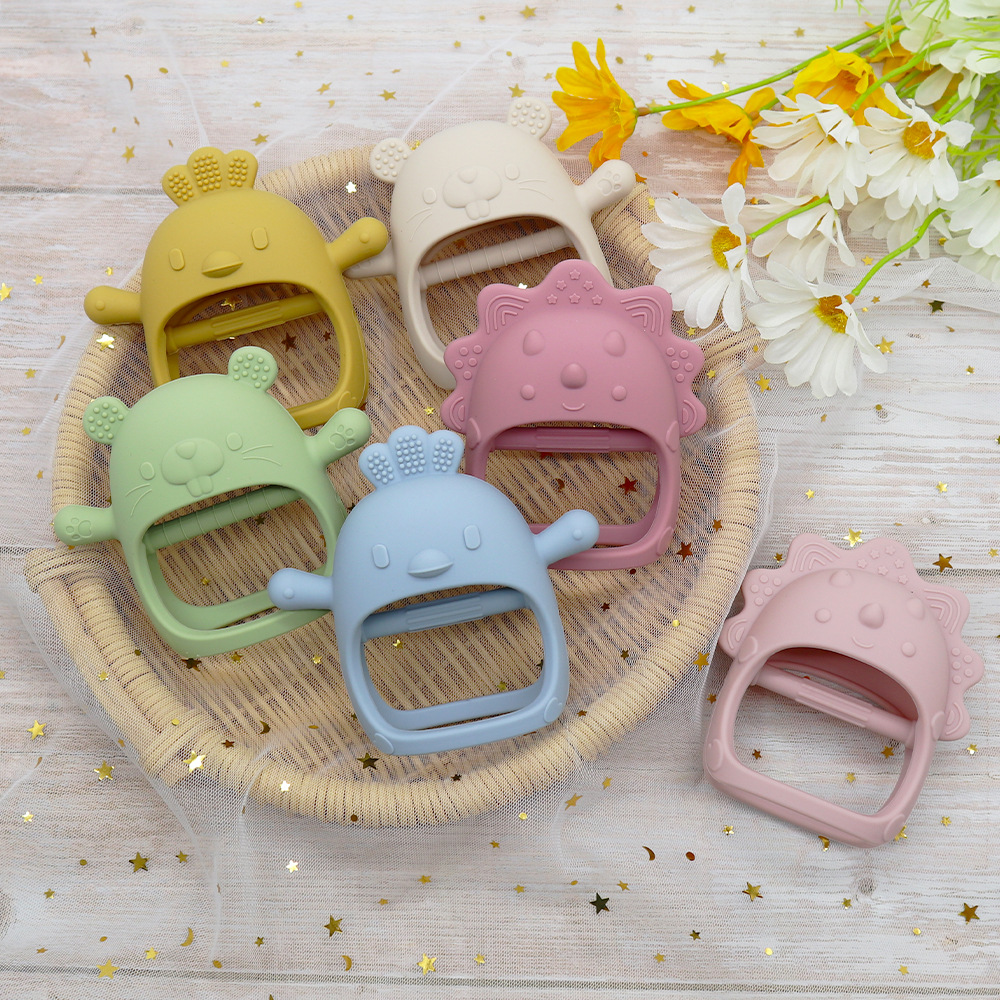
Every new parent will face a common dilemma: your newborn cries constantly due to sore and swollen gums during the teething phase.
Many people around you may suggest using a teether to soothe the baby, yet it’s totally normal to feel worried about the material safety of products that go directly into an infant’s mouth.
Your concerns are completely reasonable. When it comes to food-grade silicone teethers, you can rest easy.
This type of product is fully endorsed by material research, local safety norms and professional pediatric advice.
This guide will break down all key points for you, helping you pick reliable teething toys for your little one with total confidence.
What Makes Food-Grade Silicone Stand Out?
Silicone is synthesized from silicon — a natural element existing in sand and quartz — combined with oxygen, carbon and hydrogen.
Food-grade silicone is a premium material variant that undergoes strict testing to ensure it is harmless when touching food and babies’ oral tissues,
which sets it apart from ordinary industrial silicone. Its core strengths are listed below:
* Zero cheap fillers: Low-end silicone items often add talc, chalk and other bulking agents to cut costs, while pure food-grade silicone contains no such additives at all.
* Free from toxic compounds: It excludes BPA, phthalates and PVC, which are harmful plasticizers widely found in traditional plastic and rubber goods.
* Superior chemical stability: It will not deteriorate or release dangerous substances when exposed to baby saliva, extreme heat or cold.
* Hypoallergenic & bacteria-resistant: Its non-porous surface stops mold and germs from growing, greatly lowering the risk of skin or oral allergies for fragile newborns.
* Quick Purity Test for Parents
* Grab a light-colored silicone teether and twist it hard. If white marks or discoloration appear, the product contains low-quality fillers.
Authentic food-grade silicone will always keep its original color.
Material Comparison: Silicone Teethers vs. Other Options
We’ve sorted out a clear comparison of four mainstream teether materials, focusing on safety performance that parents care most about:
| Material | BPA-Free | Latex Allergy Risk | Chemical Leaching | Durability | Recommended for Newborns |
| Food-Grade Silicone | Yes | None | Extremely Low | High | Highly Recommended |
| Natural Rubber | Yes | Exists | Low | Medium | Use with Caution |
| PVC Soft Plastic | Mostly No | None | High | Medium | Not Recommended |
| Hard Plastic | Varies by Product | None | Medium | High | Not Recommended |
Natural rubber is organic, yet it poses a notable latex allergy hazard. Statistics show 1% to 6% of the global population is sensitive to latex,
so experts advise keeping newborns away from latex products as much as possible. Most budget-friendly PVC teethers rely on phthalates to stay soft.
These substances can disrupt human hormone systems and are labeled hazardous for kids by European chemical regulators.
By contrast, food-grade silicone is chemically inert. It is the same safe material used to produce baby bottles, pacifiers and medical supplies.
Local pediatric doctors and dentists all agree that silicone teethers are the lowest-risk choice for teething newborns.

Why BIS Certification Is Non-Negotiable for Indian Families
If you shop for baby teethers in India, BIS certification (compliant with IS 9873) is the most vital safety credential you need to check.
This national standard for infant care products enforces rigid rules for teething toys:
Chemical migration assessment: It limits the volume of substances that can seep into simulated saliva, making sure no toxins enter babies’ mouths.
Physical safety inspection: The teether must not split into tiny pieces that may cause choking during regular use.
Bite resistance test: Products have to withstand continuous biting without structural damage.
Harmful substance screening: Heavy metals like lead and cadmium, together with BPA, phthalates and unsafe pigments, must stay below official safety limits.
It’s worth noting that BIS certification is not a self-claimed label. Manufacturers must send products to officially authorized labs for full tests before obtaining the ISI mark.
You can verify a brand’s BIS license number on the official BIS website (bis.gov.in) for extra assurance. Trustworthy brands will always take the initiative to display their license details.
Ultimate Shopping Checklist: How to Choose a Safe Silicone Teether
Go through this checklist before placing your order to avoid risky products:
1. Clearly marked as 100% food-grade silicone (stay away from vague phrases like “soft material” or “non-toxic plastic”)
2. Comes with valid BIS certification, along with a verifiable ISI mark and license number
3. Explicitly labeled as BPA-free, phthalate-free and PVC-free
4. Has passed professional chemical migration tests (reliable brands can provide relevant test reports upon request)
5. No paint or metal coatings on the chewable areas
6. Adopts an integrated one-piece design with no detachable small parts
7. Features a newborn-friendly size (neither too small to trigger choking nor too big for tiny hands to grip)
8. Compatible with boiling and cold water sterilization for effortless daily cleaning
If a product fails to meet the first four standards, we suggest you skip it directly.
Critical Red Flags to Spot Unsafe Teethers Online
Countless teether products are sold on Indian e-commerce platforms, and you need to watch out for these warning signs:
Ambiguous material labels: Descriptions such as “food-safe material” or “non-toxic rubber” cannot replace the clear mark of “food-grade silicone”.
Missing brand and manufacturing information: Unbranded generic products have no clear quality supervision or after-sales guarantee.
Unreasonably cheap price: High-quality certified silicone teethers include raw material and testing costs. Products sold at an ultra-low price usually cut corners on safety.
No mention of BIS certification: This is a major warning sign for baby goods sold in India.
Strong unpleasant odor: Premium food-grade silicone is nearly odorless. A pungent chemical or rubber smell means inferior raw materials.
Lack of genuine customer reviews: Trusted baby products always have detailed feedback from real parents.
Featured Reliable Products
For Indian parents hunting for BIS-certified silicone teethers tailored for newborns, Nubokind Kiko No-Drop Newborn Teether is ideal for the early teething stage.
It is equipped with an anti-drop handle that fits newborns’ weak grip, and the chewing part is made of 100% food-grade silicone.
For slightly older babies, Nubokind Ele Ring Teether is a great alternative. Its ring shape helps babies practice hand-to-mouth coordination while ensuring the same top-tier material safety.
Both items are free from BPA, phthalates and PVC.
Frequently Asked Questions
1. Are silicone teethers safe for newborns?
Absolutely yes. Food-grade silicone is widely recognized as the safest material for newborn teething toys. It is chemically inert, free from BPA, latex and phthalates,
and will not decompose or release substances during use. Always confirm the product is food-grade and holds valid BIS certification before buying.
2. What exactly is food-grade silicone?
It is a specialized silicone formula tested and certified for direct contact with food and oral tissues.
It contains no fillers, plasticizers or forbidden chemicals, and is widely used for baby feeding tools and medical devices.
3. How to confirm a teether has legitimate BIS certification in India?
Genuine BIS-certified products print the ISI mark and the manufacturer’s BIS license number on the package. You can look up the license number on the official BIS portal.
If a brand refuses to offer its license number, treat it as a red flag.
4. Can silicone teethers trigger baby allergies?
High-quality food-grade silicone is hypoallergenic, so allergic reactions are extremely rare. Unlike natural rubber, it contains no latex proteins — the leading cause of material-related infant allergies.
If your baby has abnormal reactions after using a teether, stop using it immediately and consult a pediatrician.
Final Thoughts
A teether will be put into your baby’s mouth many times every day, so it deserves strict safety checks just like baby food.
When properly certified and clearly labeled, food-grade silicone teethers are safe, durable and the best pick for Indian newborns.
Always prioritize BIS certification and verify the license number. Stay away from products with unclear material descriptions.
Being careful about your baby’s supplies is not overthinking — it’s responsible parenting.