

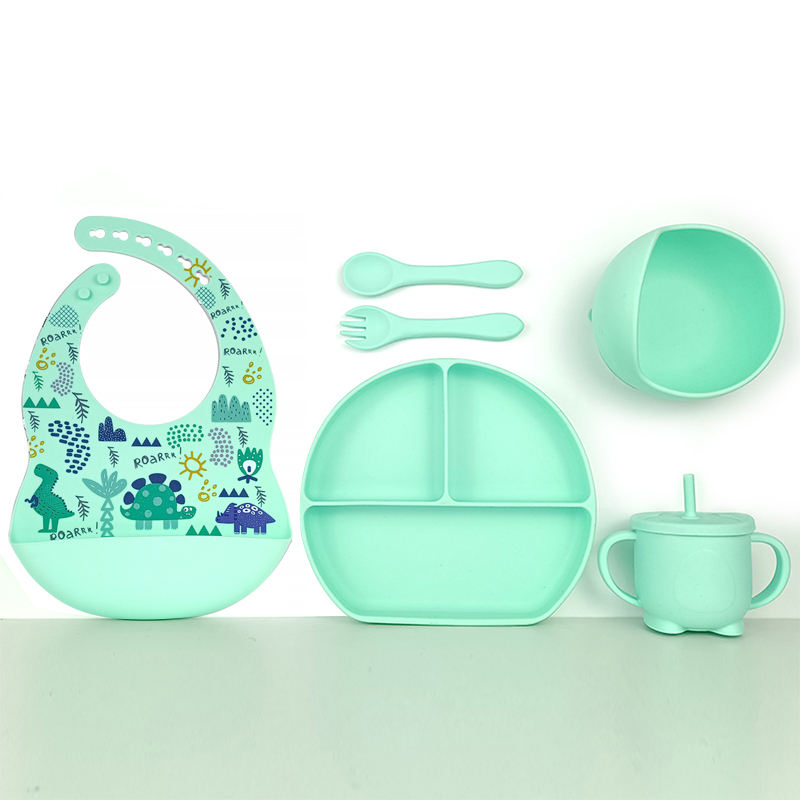
Many Australian parents opt for silicone baby tableware like bowls, plates, spoons, drinking cups and bibs, believing products marked with food-grade silicone are completely safe for little ones.
Yet a key fact is often overlooked: Australia has no mandatory safety certification rules for silicone infant tableware.
This means brands can freely sell silicone feeding products without conducting professional safety tests or disclosing material compositions, leaving families exposed to potential risks.
As the founder of Brightberry, an industrial designer and a mother of two, I have dedicated years to researching silicone material safety.
Today, I’m sharing practical insights to help all parents distinguish genuine safe silicone tableware from misleading marketing gimmicks.
"Food-Grade Silicone" Is Just a Marketing Slogan, Not a Formal Certification
It’s easy to see labels such as food-grade silicone and BPA-free on baby products across physical baby stores and social media platforms. However, these claims do not equal official certification.
Any brand can print these words on packaging without arranging independent third-party testing, so you cannot confirm what materials are actually used or what the test results are.
Besides, BPA-free is essentially a meaningless selling point for silicone. BPA is a chemical additive used to harden plastic, and pure silicone does not contain BPA by nature.
When evaluating silicone safety, focusing solely on BPA will make you ignore more critical hidden dangers.
Silicone vs Plastic: Core Material Differences
Plastic is derived from petroleum raw materials, which brings two major safety concerns for kids: harmful phthalates and microplastics.
Studies have found microplastic particles in food, drinking water and even breast milk, posing long-term threats to children’s health.
Silicone boasts a totally different molecular structure. It is made from silicon — a natural element found in sand and quartz — combined with oxygen, carbon and hydrogen.
High-quality silicone contains no petroleum-based plasticizers, will not shed microplastics, and features outstanding thermal stability.
It won’t deteriorate after repeated cleaning, nor will it leach harmful substances during daily use.
Even so, silicone is not automatically safe just because it outperforms plastic. The quality of silicone varies greatly, which mainly depends on raw material formulas and production techniques.
The Real Safety Risks of Low-Quality Silicone Tableware
When picking silicone baby tableware, the top concern is not BPA, but harmful substances that may migrate from the material into food, especially under long-term repeated use.
1. Phthalates
Phthalates are common plasticizers, among which DEHP is classified as an endocrine disruptor that disturbs human hormone balance.
The Australian government has clear regulations on this: per Consumer Protection Notice No. 11 of 2011,
tableware and utensils for children under 36 months old must have a DEHP content lower than 1% by weight.
The harm of unqualified products lies in cumulative exposure. Babies use the same bowls and spoons for three meals every day from six months old.
Their endocrine systems are still developing, making them far more vulnerable to low-dose chemical accumulation than adults.
2. Heavy Metals
Pigments and colorants added during production may introduce heavy metals including lead, cadmium, arsenic, mercury, chromium, barium and more.
Colorful silicone products without strict safety tests tend to have hidden heavy metal risks.
3. Curing Residues
The curing process is a key factor determining silicone quality, and different curing methods lead to huge gaps in safety. There are two mainstream curing techniques for silicone:
Peroxide-cured silicone: Low production cost, but it will leave residual substances after curing. This is also the reason why inferior silicone products emit a noticeable rubbery odor.
Platinum-cured silicone: Adopts platinum as the catalyst. The finished product is pure and clean, free of curing residues and peculiar smells.
It is the standard material for medical supplies and high-end food-contact products.
A simple pinch test helps you identify fillers: Pinch, twist and stretch silicone products firmly. If white streaks appear, it means fillers are added to cut costs.
Qualified platinum-cured silicone will not turn white after stretching.
Raw Material Certificate ≠ Finished Product Test Report
Many brands only provide raw silicone material inspection reports, which cannot prove the safety of the final tableware.
During production, manufacturers will add pigments and carry out compression molding and heat curing.
These processes will change the properties of raw materials, and pigments may also bring new contaminants.
Only conducting comprehensive tests on finished products of official production batches can truly verify whether the tableware is safe for babies.
This is exactly what migration testing focuses on.
What Does Migration Testing Include?
Migration testing simulates real dining scenarios. Testers soak finished silicone products in three common food simulants at specified temperatures and durations:
distilled water (for watery food),3% acetic acid (for acidic food like fruit puree) and 10% ethanol (for fatty food). Then they detect all substances migrating from the silicone.
A complete food contact migration test covers these core items:
1.Overall migration of all substances
2.Various phthalates including DEHP, DBP, BBP, DIBP and DINP
3.Multiple heavy metals
4.Peroxide curing residues
5.Volatile Organic Compounds (VOC) causing peculiar smells
6.Total platinum content to verify curing technology
The ideal test result is "not detected" for all above items.
Major Global Safety Standards for Silicone Baby Tableware
When selecting products, please check which international safety standards the brand complies with. Clear standard codes are more credible than vague "safe certification" claims.
1. LFGB Certification
LFGB (Lebensmittel- und Futtermittelgesetzbuch) is Germany’s food and daily necessities code,
and its supporting BfR Recommendation XV is globally recognized as one of the strictest safety standards for food-contact silicone.
Different from US FDA standards, LFGB requires testing on three types of food simulants, plus strict detection of VOC and peroxide residues, with stricter limits on migrated substances.
2. US FDA 21 CFR 177.2600
It is the basic standard for food-contact silicone in Australia and the United States. It mainly tests extractives in distilled water and n-hexane,
and passing this standard is the minimum requirement for selling food-grade silicone products locally.
3. EN 14372:2004
This European standard targets children’s feeding utensils for kids under 36 months old.
It covers both chemical safety and mechanical performance tests, such as sharp edges, sharp points, detachable small parts, tensile strength,
drop resistance and torque resistance, to prevent choking and physical injuries.
4. EU ResAP(2004)5
A European Council resolution for food-contact silicone products, focusing on overall migration testing of materials.
5. Australian Local Standard
All baby tableware sold in Australia must comply with Consumer Protection Notice No. 11 of 2011, which restricts the content of DEHP phthalates.
Brightberry’s Product Testing Standards & Results
All Brightberry silicone feeding products adopt platinum-cured silicone and have passed independent tests by internationally accredited labs including TÜV Rheinland and CTT.
All test samples are formal finished products of production batches with official colors, rather than raw materials.
Silicone suction plates, bowls, lids and placemats: Fully pass LFGB (BfR Recommendation XV), EU ResAP(2004)5, EN 14372:2004, US FDA 21 CFR 177.2600 and Australian DEHP regulations.
All heavy metals and phthalates are not detected.
Silicone smoothie cups and straws: Pass EN 14372:2004, EU ResAP(2004)5, US FDA and Australian local standards. The full LFGB extractive test is still in progress and will be completed in the next production cycle.
Baby bibs: Mainly in direct contact with skin, tested in line with US CPSIA/ASTM F963 standards. Eight types of phthalates, various heavy metals and lead are all not detected, with qualified mechanical performance and flame resistance.
Silicone teethers: Comply with Australian and New Zealand toy safety standard AS/NZS ISO 8124, plus EU, US and local Australian regulations.
We always present real test results frankly. Some products are still in the process of full LFGB certification, and we will never make false promotion.
Our core commitment is to use high-quality materials and strict third-party testing to protect babies’ health.
Practical Buying Guide: 6 Questions to Ask Brands
Before purchasing silicone baby tableware, use these criteria to screen reliable products:
Can the brand list specific compliance standards, such as LFGB, FDA 21 CFR 177.2600, EN 14372 and Australian local regulations?
Are the tests conducted on finished products or just raw silicone materials? Finished product tests are the only credible reference.
Which accredited third-party lab completed the tests? Such as TÜV Rheinland, CTT, SGS and Intertek. Internal self-tests are not persuasive.
What are the phthalate (especially DEHP) test results? Qualified products should show "not detected".
Does the product use platinum-cured silicone? You can verify via the pinch test.
Has the product passed mechanical safety tests to prevent breakage and small part falling off?
Final Summary
The label food-grade silicone cannot guarantee product safety. For silicone baby tableware, the three core judging criteria are platinum-cured silicone material,
independent finished product migration testing and qualified reports of all restricted substances.
Currently, Australia lacks mandatory certification for silicone infant tableware, which requires parents to polish their eyes. Choose brands that take the initiative to display complete test reports and specific compliance standards, and stay away from products with vague descriptions, strange odors and ultra-low prices. Scientific selection is the best protection for your baby.